
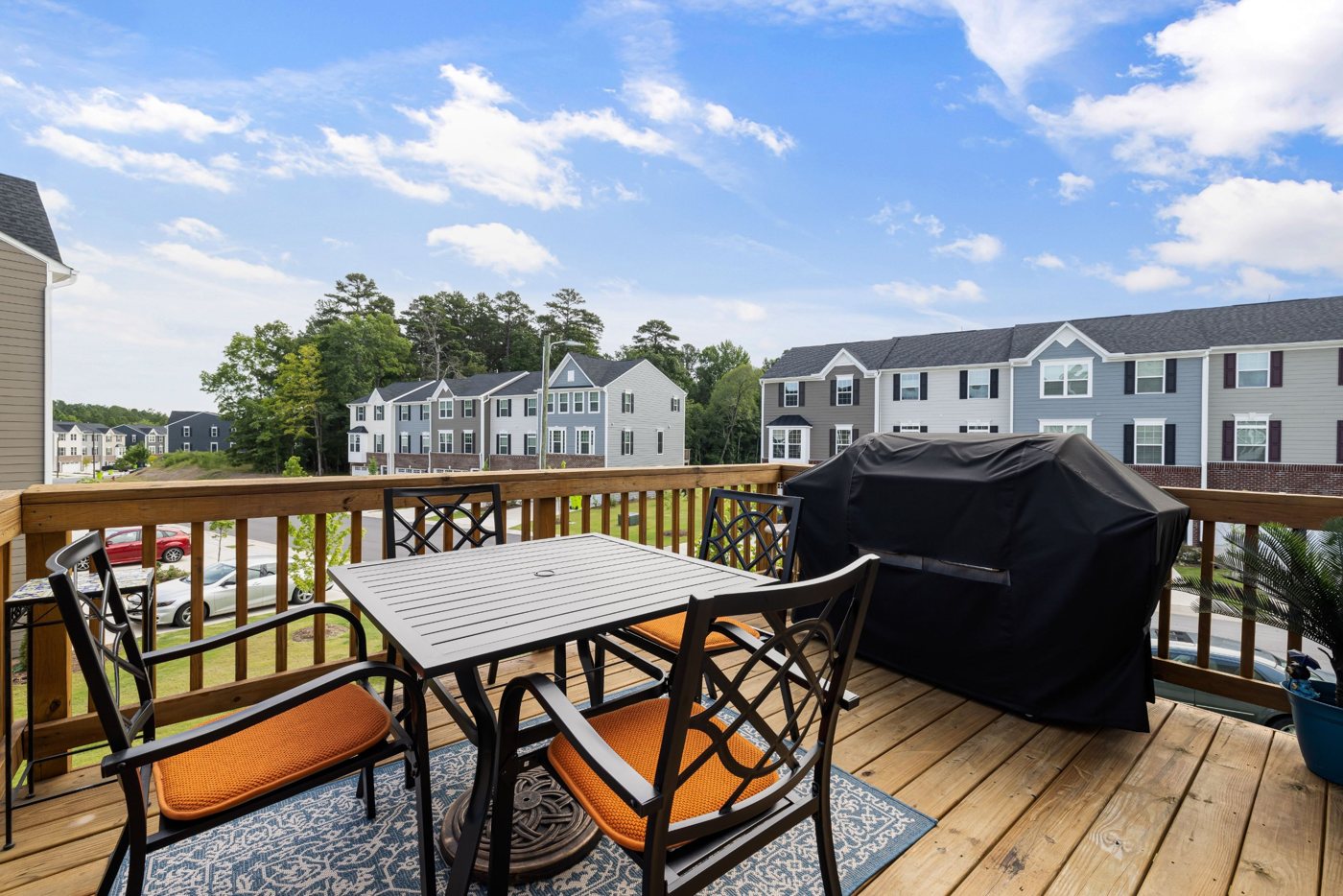
Most decks in Southern New Hampshire sit under snow for a good part of the winter. How you treat a deck between November and March has a lot to do with how it holds up. A little attention now and one careful look in spring will catch most problems while they're small.
Before the first snow
A quick fall clean-up makes the rest of the winter easier.
- Sweep off leaves, pine needles and other debris, and clear the gaps between boards. Wet leaves left sitting on wood all winter hold moisture and can stain or soften the surface.
- Move planters, rugs and furniture you won't use. Anything that sits flat on the boards for months traps water underneath.
- Look at the railings, stairs and posts while you can still see them. A loose baluster or a wobbly stair is easier to deal with now than after it's buried.
Shoveling: what to clear and what to leave
You don't have to keep the whole deck clear all winter. A lot of homeowners leave most of the snow in place and only shovel what they actually use, like the path from the door to the stairs or the stairs themselves.
When you do shovel, a few things help protect the surface:
- Use a plastic shovel rather than a metal-edged one, which can gouge wood and scratch composite.
- Push along the length of the boards, not across them, so the blade doesn't catch on board edges.
- Leave a thin layer of snow on the boards instead of scraping down to bare wood.
- Heavy, wet snow piled high adds weight. If a big storm drops a lot of it, or the deck is older and you're not sure about its condition, clearing some of it off is a reasonable step.
Ice melt and salt
This is where people do the most damage without meaning to. Some ice melt products can discolor or break down wood, damage finishes, and corrode metal fasteners and railings. Composite and PVC decking makers usually publish their own guidance on what is safe to use on their boards.
Before you buy anything, check the guidance for your decking, if you know the brand. If you don't, a small bag of sand on the stairs for traction is a gentler option.
Where the deck meets the house
The spot where a deck attaches to the house, usually a board called the ledger, is one of the most important parts of the whole structure. When flashing above it is missing or has failed, water can get behind it and rot the ledger or the house framing behind it, often without much showing on the surface.
In winter, try not to let snow and ice pile up against the siding along that line. If you see water stains, peeling paint or soft spots on the inside wall or the basement ceiling near the deck, it's worth having someone look.
Your spring inspection list
Once the snow is gone and the deck has dried out, take a slow walk around it, on top and underneath.
- Boards: soft spots, splits, cupping, and raised nail or screw heads. Press a screwdriver into suspect wood. If it sinks in easily, that board probably needs replacing.
- Railings: push on each section. Railings should feel solid, with no movement at the posts.
- Stairs: check treads, stringers and the spot where the stairs meet the ground, which tends to stay wet.
- Posts and footings: look for posts that have shifted, leaned or lifted. Freeze and thaw cycles can move footings that weren't set deep enough.
- Ledger and flashing: look from underneath for staining, rot or loose fasteners where the deck meets the house.
- Hardware: rusted joist hangers, brackets or fasteners deserve a closer look.
Some of this is easy to fix, like a few loose boards or a popped screw. Other things, like a soft ledger, rotted posts or a railing that moves, are safety issues and shouldn't wait.
Repair or replace?
That depends on what you find. If the framing is sound and the problems are mostly on the surface, replacing boards, railings or stairs can make sense. If the posts, joists or ledger are in rough shape, a rebuild may be the better choice. If you're planning new work, ask whether your town needs a permit for it.
How CRC can help
We build and repair decks and porches for homeowners across Southern New Hampshire, from Manchester to Portsmouth. If winter left your deck soft, loose or leaning, or you'd like a second opinion before spring, we can take a look and tell you what we'd recommend.
You can request an estimate below or call us at (603) 665-0447.