
The leaves are down, the furnace is running, and in a few weeks the ground will start to freeze. This is a good time to take a slow walk through your basement. Small moisture problems are easier to spot and cheaper to deal with now than in March, when snowmelt and spring rain put the most water against your foundation.
You do not need tools for most of this. Bring a flashlight and your nose.
Signs to look for inside
- A musty or earthy smell that does not go away, even after the space has been aired out.
- White, chalky streaks on concrete or block walls. This is called efflorescence. It is left behind when water moves through masonry and evaporates.
- Damp spots, dark patches or faint water lines on the walls or floor, especially along the bottom edge where the wall meets the slab.
- Paint or coatings peeling off the foundation walls.
- Rust on things that sit on the floor, like the legs of a washer, a water heater stand or metal shelving.
- Mold or mildew on cardboard boxes, stored furniture or the bottom of wood framing.
- A sump pump that runs often, or a pit that always has water in it.
- Cracks in the walls or floor that look damp or have stains around them.
Older homes around Southern NH often have fieldstone or block foundations. These tend to let in more moisture than poured concrete, so some dampness can be normal. What you want to know is whether it is getting worse or showing up in new places.
Is it coming in, or is it condensation?
Not every damp basement has a leak. Warm, humid air hitting cool foundation walls or cold water pipes leaves condensation, and that can look a lot like seepage.
A simple check: tape a square of clear plastic, about a foot on each side, tightly against a damp-looking spot on the wall. Leave it for a day or two. If moisture forms under the plastic, water is likely coming through the wall. If it forms on the room side, the air in the basement is too humid.
Humidity problems often improve with a dehumidifier and better air movement. Water coming through the wall needs a different fix, and a dehumidifier alone will not solve it.
What to check outside before it freezes
A lot of basement water starts outside the house.
- Clean the gutters after the last leaves come down. Clogged gutters overflow right next to the foundation.
- Make sure every downspout empties well away from the house, not at the corner of the foundation. Extensions are inexpensive and easy to add.
- Look at how the ground slopes. Soil should fall away from the house. Settled spots, flower beds and patios that tip toward the foundation send water to the wall.
- Clear leaves and debris out of basement window wells.
- Walk the foundation and note any cracks you can see from outside, so you can compare them in spring.
When to call someone
Some moisture is a maintenance issue you can handle yourself. Other signs mean it is time to bring in the right person:
- Water actually pooling on the floor after rain or snowmelt.
- Cracks that are getting wider, or walls that bow or lean. A structural engineer should look at those before anyone patches them.
- A sump pump that fails, short cycles or cannot keep up.
- Dampness near pipes, which may mean a plumbing leak.
- Mold spreading across walls, framing or stored items.
Depending on what you find, the right call might be a waterproofing company, a plumber, an engineer or a general contractor. A good contractor will tell you when the problem is outside their trade.
Thinking about finishing the basement?
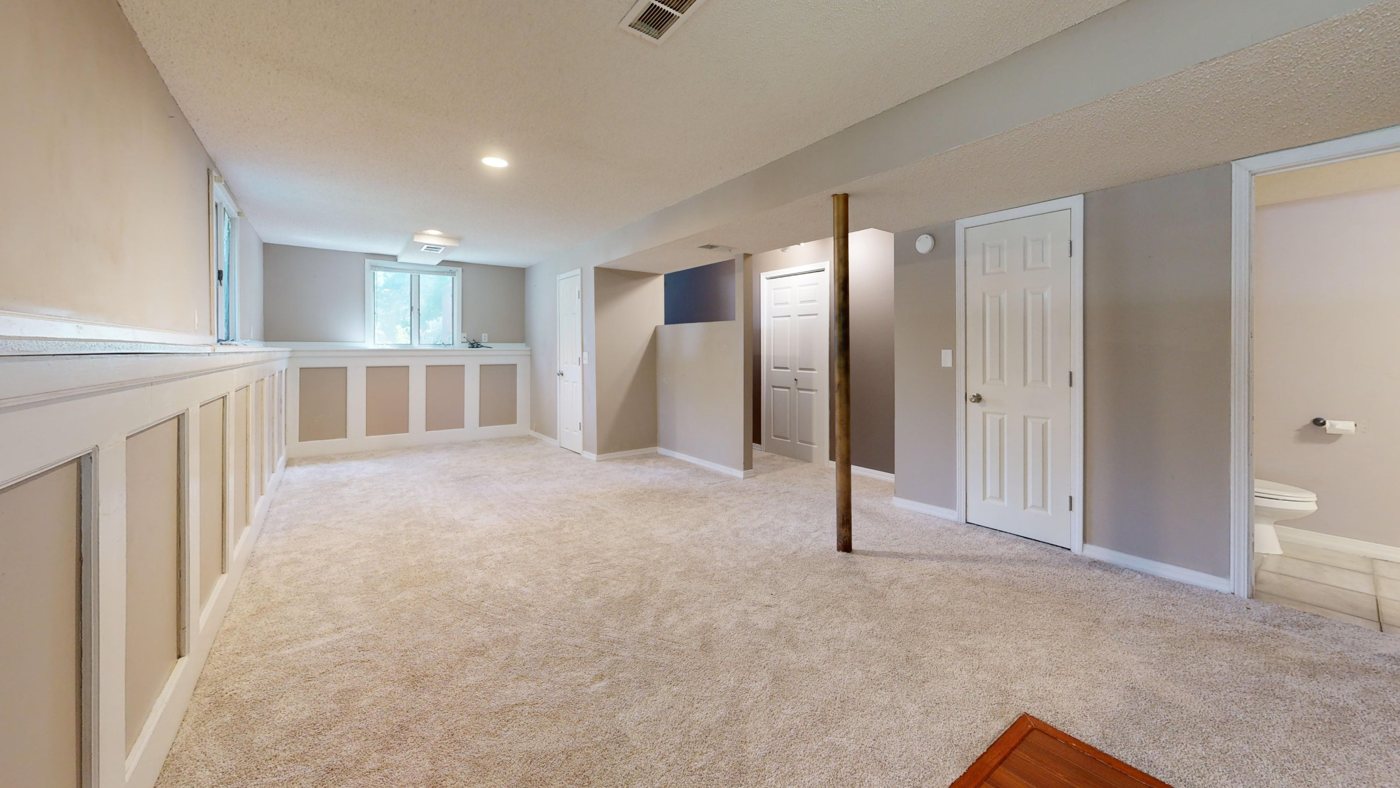
If a finished basement is on your list, moisture comes first. Framing, insulation, drywall and flooring all trap whatever dampness is already there, and fixing it later means tearing out finished work. Watch the space through at least one wet season if you can, and keep notes on what you see and when.
When you talk to contractors, ask how they plan to handle moisture, what materials they would use against the foundation walls and how they deal with permits in your town. The answers will depend on your house.
How CRC can help
We finish basements and handle repairs and carpentry for homes across Southern New Hampshire, from Manchester to Portsmouth. If you are planning a basement project, we can look at the space with you and talk through what needs to happen first. When a problem calls for a plumber or another specialist, we will tell you, and we can help coordinate that work.
You can request an estimate below or call us at (603) 665-0447.